Review: Who Needs Luck When You're This Cute SVG for Embroidery
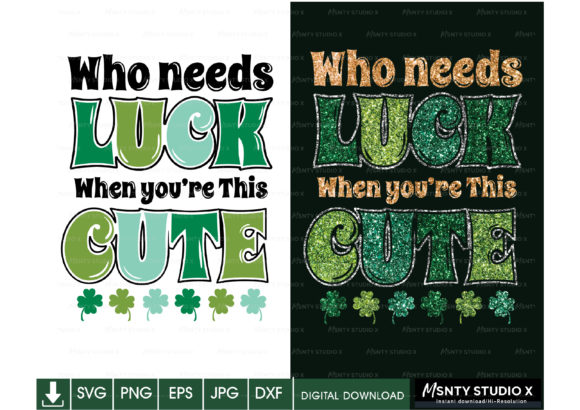
As a designer who spends more time staring at stitch simulations than actual sunlight, I approach every new digital embroidery file with a healthy dose of skepticism. We have all been there: you buy a cute graphic, digitize it (or download a pre-made version), and halfway through the run, you realize the satin columns are too wide or the text is going to turn into a bird's nest. That is why I took a close look at the Who Needs Luck when You re This Cute Svg design before committing it to a client project. This isn't just about whether the image is adorable; it is about whether it survives the transition from screen to thread.
First Impressions and Design Personality
The moment you pull up this file, the mood is immediately clear. It leans heavily into that playful, confident charm that works exceptionally well for St. Patrick's Day without being overly cliché. The layout suggests a balance between typography and illustrative elements, which is always a tricky tightrope to walk in embroidery. For a machine embroidery design to succeed, the visual personality must translate into stitch types that make sense. Does the "cute" factor rely on tiny details that will vanish under a fill stitch? Or is it bold enough to stand out on a textured fabric?
In my initial assessment, the design feels versatile. It has the kind of visual weight that suggests it would look fantastic as a central chest logo on a sweatshirt or a prominent feature on a tote bag. The theme is festive but not so specific that the item becomes useless on March 18th. That longevity is crucial for anyone running a craft business or selling on Etsy. You want a handmade product that customers feel good wearing weeks after the holiday has passed.
Real-World Application: The Tote Bag Test
To truly evaluate this asset, I imagined a specific real-life scenario: a custom order for a boutique shop needing a run of canvas tote bags for a spring market. The client wanted something fun but professional. Here is where Who Needs Luck when You re This Cute Svg really shines. Canvas provides a stable base, meaning you don't have to worry as much about fabric distortion, allowing the design's details to pop.
If I were stitching this onto a heavy cotton tote, I would lean into a higher stitch density for the solid areas to ensure full coverage, while using a crisp satin stitch for any outlines or lettering. The contrast between the thread and the natural canvas color would be key. If the design includes fine lines, they need to be thick enough to not get lost in the weave of the canvas. For a project like this, the design acts as a strong brand identifier. It tells the buyer that the shop owner has an eye for detail and a sense of humor.
Beyond totes, consider sweatshirt embroidery. On fleece or French terry, the stakes are higher. The fabric loops can swallow small details. If this SVG is being used for apparel, I would recommend simplifying any intricate background elements. The phrase itself is the hero here. Ensuring the text is legible after the fabric relaxes post-wash is vital for customer trust. A blurry message looks unprofessional, no matter how cute the sentiment is.
Navigating Fabric Challenges and Hoop Constraints
Not every surface is as forgiving as a canvas tote. When moving this design to trickier materials, caution is required. If you are planning baby embroidery on a soft onesie, the fabric is stretchy and thin. You must use a high-quality cut-away stabilizer to prevent the design from puckering over time. Babies move, and they wash frequently; the structural integrity of the stitch matters more here than on a decorative pillow.
Another common pitfall is curved surfaces, like caps. If you intend to use this for hat embroidery, check the dimensions against your hoop size capabilities. Cap frames are notoriously restrictive. If the design is too wide, you might have to break it into sections, which is a nightmare for registration. Furthermore, detailed corners on a curved brim can lead to thread breaks or poor coverage. I always advise testing on a scrap piece of the exact same material, hooped exactly how you plan to hoop the final garment.
Dark fabrics present another consideration. If the original SVG relies on white space or light colors, stitching it onto a black hoodie requires careful planning. You may need an underlay stitch that is denser than usual to prevent the dark fabric from showing through the top threads. This affects the overall thickness of the finished product, which can be uncomfortable if the design is too large on a fitted shirt.
Commercial Viability and Brand Consistency
For the Etsy seller or the creator of design assets, the commercial potential of this file depends on its adaptability. Can it be resized without losing quality? Since this is listed as an SVG and PNG, it is likely intended for cutting machines or print, but many embroiderers use these as a base for manual digitizing or auto-digitizing software. If you are using it as a reference to create your own stitch file, the clarity of the vector lines is paramount.
Using a cohesive design like this helps build brand recognition. If you sell a line of holiday embroidery products, having a consistent style across your listings makes your shop look established. However, you must verify the licensing terms. Just because a file is available for instant download does not automatically grant unlimited commercial rights for physical goods versus digital resale. Always read the fine print to ensure you aren't violating terms when selling custom apparel or embroidered patches.
Practical Notes for the Working Designer
Before you commit to a production run, here is my checklist for working with this specific type of design:
- Test on Scraps: Never skip the test stitch-out. Use the same fabric and stabilizer combination you plan to use for the final item.
- Check Thread Contrast: Ensure your thread colors stand out against the fabric. A low-contrast look can be stylish, but it shouldn't look like a mistake.
- Review Stitch Density: If you are digitizing this yourself from the SVG, watch out for overly dense areas that cause fabric stiffening.
- Inspect Small Details: Zoom in on the digital file. Are there isolated pixels or tiny islands of color that won't stitch well?
- Mockup Verification: Create black and white mockups to see if the design holds its shape without relying on color.
- Licensing Confirmation: Double-check if the license allows for unlimited physical sales or if there is a cap on the number of items you can produce.
Ultimately, Who Needs Luck when You re This Cute Svg offers a charming foundation for a variety of projects. Whether you are making a personalized gift for a friend or stocking inventory for a small shop product line, the success lies in the execution. By respecting the limitations of your materials and understanding the nuances of stitch construction, you can turn a simple digital download into a high-value, professional-grade item. The design has the personality; it is up to you to give it the durability it deserves.