Review: Hold on Let Me Overthink This SVG for Embroidery
As a designer who spends more time staring at stitch simulations than I do sleeping, I approach every new digital embroidery file with a healthy dose of skepticism. We have all been there: you download a cute graphic, load it into your software, and realize the lines are too close together for a clean satin stitch or the text is so small it will turn into a thread blob after one wash. That is why I was intrigued when I pulled up the Hold on Let Me Overthink This - Svg to evaluate it for a real-world embroidery project. This isn't just about whether the image looks good on a screen; it is about whether it translates into a professional finished product that you can sell with confidence.
The Vibe Check: Why This Design Works
The first thing that strikes me about this design is its mood. In the world of Crafts and handmade goods, we often lean heavily into sweet, sentimental, or overly polished aesthetics. Sometimes, though, customers want something that speaks to their actual internal monologue. The phrase "Hold on let me overthink this" hits a nerve of relatable humor that is perfect for the current market. It is sarcastic without being mean, and self-aware without being depressing.
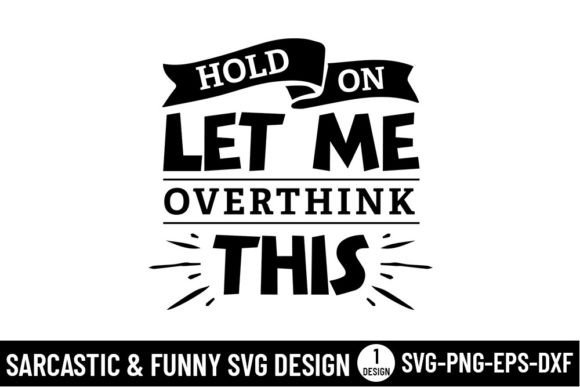
Visually, the layout of the Hold on Let Me Overthink This - Svg feels balanced. When I imported the SVG into my digitizing software to inspect the vector paths, the typography appeared sturdy. For a text-based design intended for embroidery, this is crucial. Flimsy fonts with excessive swashes or ultra-thin serifs are a nightmare to stitch out, especially on textured fabrics. This design seems to utilize a font weight that can handle the thickness of embroidery thread. Whether you are planning a satin stitch outline or a solid fill stitch block, the letterforms have enough body to maintain clarity. It feels like a design that belongs on a cozy Sunday morning, perhaps stitched onto a coffee mug warmer or the pocket of a well-worn cardigan.
Real-World Application: The Tote Bag Test
To truly gauge the value of this asset, I imagined a specific scenario: a custom order for a local boutique looking for small shop product ideas. They wanted a line of canvas tote bags for students and creatives. This is where the Hold on Let Me Overthink This - Svg shines. Canvas is a forgiving fabric with a tight weave, making it an ideal candidate for this type of graphic.
If I were producing this run, I would likely use a combination of running stitches for any decorative elements and a dense fill for the text to ensure durability. The sarcasm of the quote pairs perfectly with the utility of a tote bag—something people use while carrying too many things and worrying about forgetting others. For an Etsy seller, this kind of item is a goldmine. It appeals to the "craft business" demographic who appreciate meta-humor. Furthermore, because the design is provided in multiple formats including PNG and EPS, it is incredibly versatile. You aren't locked into just stitching it; you could easily use the high-resolution PNG for a printable mockup to list in your shop before you even hoop a single thread, or use the EPS for vinyl cutting if a customer prefers heat transfer over embroidery.
Technical Considerations for Stitching
While the design concept is strong, practical execution requires attention to detail. Before you commit to stitching this on a client's expensive garment, there are several technical factors to consider regarding the machine embroidery design workflow.
First, consider your hoop size. Text-heavy designs need adequate spacing. If you are working with a smaller 4x4 hoop, you must ensure the scaling does not compress the letters to the point where they merge. I recommend testing the design on scrap fabric first. This is non-negotiable. You need to see how the stitch density interacts with your specific machine tension. A design that looks crisp on a screen can pucker badly if the density is too high for the fabric weight.
Fabric choice is another critical variable. This design would look fantastic on a structured sweatshirt or a denim jacket. However, if you attempt this on a thin, stretchy t-shirt or a slippery rayon blouse, you might run into registration issues. The phrase implies a pause for thought, but your machine shouldn't have to pause to fix skipped stitches. Using the correct stabilizer is vital here. For knits like sweatshirts, a cut-away stabilizer is usually best to prevent the design from distorting over time. For woven items like aprons or pillow covers, a tear-away might suffice, but always err on the side of more support when dealing with larger text blocks.
Navigating Tricky Surfaces
What about caps? Embroidering on curved surfaces is always a challenge. The Hold on Let Me Overthink This - Svg has a linear layout that generally works well on the front panel of a cap, provided the text isn't too wide. If the design spans the entire curvature, the outer letters may look distorted once stitched. In this case, you might need to manually adjust the pull compensation in your digitizing software or choose a flatter placement area, like a beanie or a flat patch.
Speaking of patches, this design is an excellent candidate for an embroidered patch. Creating a merrow-edge patch with this slogan could be a standalone product for your craft business. Patches allow you to control the backing and stabilizer completely, ensuring the highest quality result regardless of what the customer eventually sews it onto. It also opens up avenues for commercial embroidery contracts with local brands looking for unique merchandise.
Color Theory and Visual Appeal
The beauty of receiving files in SVG, DXF, and PNG formats is the freedom to experiment with thread colors. While black thread on white fabric is a classic look for sarcastic quotes, do not limit yourself. Imagine this design stitched in a muted sage green on a cream-colored linen tea towel for a holiday gift. Or perhaps a vibrant coral on a navy blue baby embroidery project (though keep in mind the message is more suited for the parents than the infant!).
Contrast is king. To maximize the readability and impact of the Hold on Let Me Overthink This - Svg, ensure there is a significant difference between your thread color and your fabric color. Low-contrast combinations might look trendy in a photo, but they often fail to communicate the message clearly in person. If you are selling these as personalized gifts or custom apparel, your customers need to read the joke instantly. I suggest creating black and white mockups during your design phase to verify that the contrast holds up before selecting your final thread palette.
Commercial Viability and Licensing
For the creative entrepreneurs and digital product sellers reading this, the commercial potential of this graphic is significant. However, it is imperative to check the licensing terms associated with the specific download. The product description notes you receive a zip file with SVG, PNG, EPS, and DXF formats, which covers a wide range of production methods from CNC cutting to digital printing. But does the license allow for unlimited physical sales? Can you use it for print-on-demand services?
Never assume. Always verify the license before listing items on Etsy or Amazon Handmade. Assuming you have the rights to sell finished goods, this design offers high perceived value. It transforms a blank tote bag design or a plain hoodie into a statement piece. Customers are willing to pay a premium for items that express their personality, and "overthinking" is a universal experience that builds immediate rapport.
Final Verdict for Makers
In conclusion, the Hold on Let Me Overthink This - Svg is a robust addition to your library of design assets. It bridges the gap between digital Graphics and tangible textile art effectively. Its strength lies in its relatability and its structural simplicity, which makes it forgiving for various skill levels while still looking professional in a boutique setting.
Whether you are creating nursery decor with a twist, stocking up on wedding gifts for stressed-out brides, or simply adding some personality to your own kitchen towels, this file delivers. Just remember to respect the technical limits of your machine, choose your fabrics wisely, and always test your stitch-out. With the right approach, this design can become a staple in your handmade product lineup, driving engagement and bringing a smile to anyone who reads it. After all, in a world that moves too fast, sometimes we all just need to hold on and overthink it for a minute.