Eat Sleep Trade SVG: A Designer's Review for Embroidery
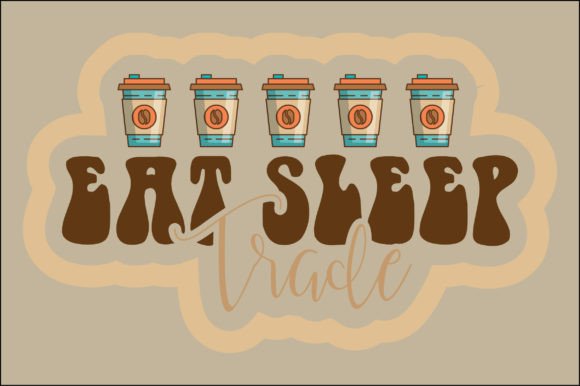
When I first pulled up the Eat Sleep Trade SVG on my screen, my immediate reaction wasn't just about the file format or the pixel density; it was about the story it tells. As a designer who spends hours staring at stitch simulations and thread charts, I look for designs that have a clear visual personality. This graphic carries a relaxed, lifestyle-oriented vibe that feels perfectly suited for the modern maker. The layout suggests a rhythm of life centered around a specific passion, whether that is stock trading, sports exchanging, or simply the hustle of a small business owner. For those of us in the crafts industry, finding a design that balances simplicity with character is often the hardest part of the creative process.
First Impressions and Visual Flow
The strength of the Eat Sleep Trade SVG lies in its typographic balance. In the world of graphics, whitespace is just as important as the ink, and this design seems to understand that. When translating a digital vector into a physical machine embroidery design, the spacing between letters dictates how well the threads will lay down. If the kerning is too tight, you risk thread bunching; too loose, and the phrase loses its cohesion. From what I can see, this design offers a sturdy foundation for conversion. It feels like a design that would look exceptional as a satin stitch application on a structured garment, where the sheen of the thread can enhance the boldness of the message.
The mood created here is one of dedication and routine. It is not overly ornate, which makes it versatile. It does not scream for attention with unnecessary flourishes, but rather settles comfortably into the fabric of daily life. This makes it an ideal candidate for a wide range of embroidery projects, from high-end boutique apparel to cozy home goods.
Real-World Application: The Custom Sweatshirt Scenario
To truly evaluate this asset, I imagined a specific real-life scenario: a client request for a custom sweatshirt embroidery piece for a day trader who works from home. They wanted something that felt professional yet personal, suitable for video calls but comfortable enough for long hours at the desk. The Eat Sleep Trade SVG fits this brief perfectly. Placed centrally on the chest of a heavyweight cotton blend sweatshirt, the design acts as a subtle badge of identity.
In this context, the finished product would rely heavily on thread choice. A matte polyester thread in a deep navy or charcoal grey against a heather grey fabric would provide a sophisticated, understated look. Alternatively, using a vibrant royal blue or emerald green could inject energy into the piece, appealing to a younger demographic. The simplicity of the design ensures that even on a textured fabric like French terry, the readability remains high. This is crucial for custom apparel where the wearer wants the message to be instantly recognizable without needing to squint.
Versatility Across Product Lines
Beyond sweatshirts, this design has legs in other areas of the craft business. Consider a tote bag design for a financial literacy workshop or a local investment club meetup. The durability of embroidery makes it superior to vinyl for items that will be tossed in a bag and washed frequently. The Eat Sleep Trade SVG could also be scaled down for a baby embroidery project—perhaps a onesie for the child of a busy entrepreneur, adding a touch of humor and heritage to the nursery.
For Etsy sellers and handmade shop owners, the potential extends to home decor. Imagine this stitched onto a linen pillow cover for a home office or a kitchen towel for the breakroom. The thematic consistency allows for creating entire collections. If you are selling design assets or finished goods, having a motif that translates well across different mediums increases your inventory value without requiring new creative heavy lifting for every item.
Technical Considerations for Stitching
While the aesthetic appeal is strong, a responsible designer must address the technical realities of turning this digital embroidery file into a handmade product. There are specific scenarios where caution is advised.
- Fabric Texture and Stretch: On highly stretchy fabrics like jersey knits, the stability of the text is paramount. Without a high-quality cut-away stabilizer, the letters might distort over time, especially after multiple wash cycles. The "Trade" portion of the text, depending on the font weight, needs sufficient underlay to prevent the fabric from peeking through.
- Small Hoop Sizes: If you intend to use this on a cap or a small embroidered patch, you must verify the minimum dimensions. Tiny lettering can become illegible if the stitch density is too high for the scale. It is always wise to test the design on scrap fabric first to ensure the smallest details do not merge into a solid blob of thread.
- Dark Fabrics: When working on black or dark navy garments, the contrast becomes the defining feature. You may need to adjust the thread colors or add a backing layer to prevent the dark fabric from shadowing the lighter threads. Testing in black and white mockups before stitching can save a lot of wasted material.
- Curved Surfaces: Applying this to a curved surface like a baseball cap requires careful hooping. The straight lines of the text must align perfectly with the brim; otherwise, the design will look skewed. This is a common pitfall in commercial embroidery that can ruin an otherwise great product.
Enhancing Brand Value and Customer Trust
The way a design is executed directly impacts brand consistency and customer trust. A clean, well-digitized version of the Eat Sleep Trade SVG signals professionalism. It tells the buyer that the creator cares about quality. In contrast, a poorly stitched version with loose threads or misaligned letters can damage a small shop product's reputation instantly. For personalized gifts and holiday embroidery projects, the emotional value is tied to the physical quality. A recipient is more likely to cherish a gift that looks durable and thoughtful.
Furthermore, for those creating printable mockups for online listings, the clarity of this design allows for stunning presentations. It photographs well because the shapes are distinct and the message is clear. This visual appeal drives buyer engagement on platforms like Etsy or Shopify, where customers scroll quickly and stop only for images that pop.
Final Designer Notes and Best Practices
Before committing to a production run or listing this as a commercial embroidery asset, there are several practical steps every maker should take. First, always check the licensing terms provided by the seller. The description mentions "Hello and Welcome to my T-Shirt Design Store," which implies these are digital files intended for transfer, but you must confirm if the license allows for unlimited sales of finished physical goods or if there are restrictions on digital redistribution.
Second, review the file formats available. Ensure you have the correct extension for your specific embroidery machine software. If the file is purely a vector SVG intended for cutting machines, it will need to be digitized into a stitch file (like .PES, .DST, or .EXP) before it can be embroidered. Do not assume an SVG is ready-to-stitch unless explicitly stated.
Finally, consider the longevity of the product. For items like aprons or tea towels that face frequent washing and abrasion, a fill stitch approach might be more durable than a simple running stitch outline. Test different densities to find the sweet spot between coverage and flexibility.
The Eat Sleep Trade SVG is a promising asset for any creative entrepreneur looking to expand their catalog with meaningful, lifestyle-driven designs. With the right technical preparation and an eye for detail, it can become a staple in your portfolio, bridging the gap between digital convenience and tactile artistry. Whether you are making a wedding gift for a finance-loving couple or stocking up for a craft fair, this design offers a solid foundation for success.